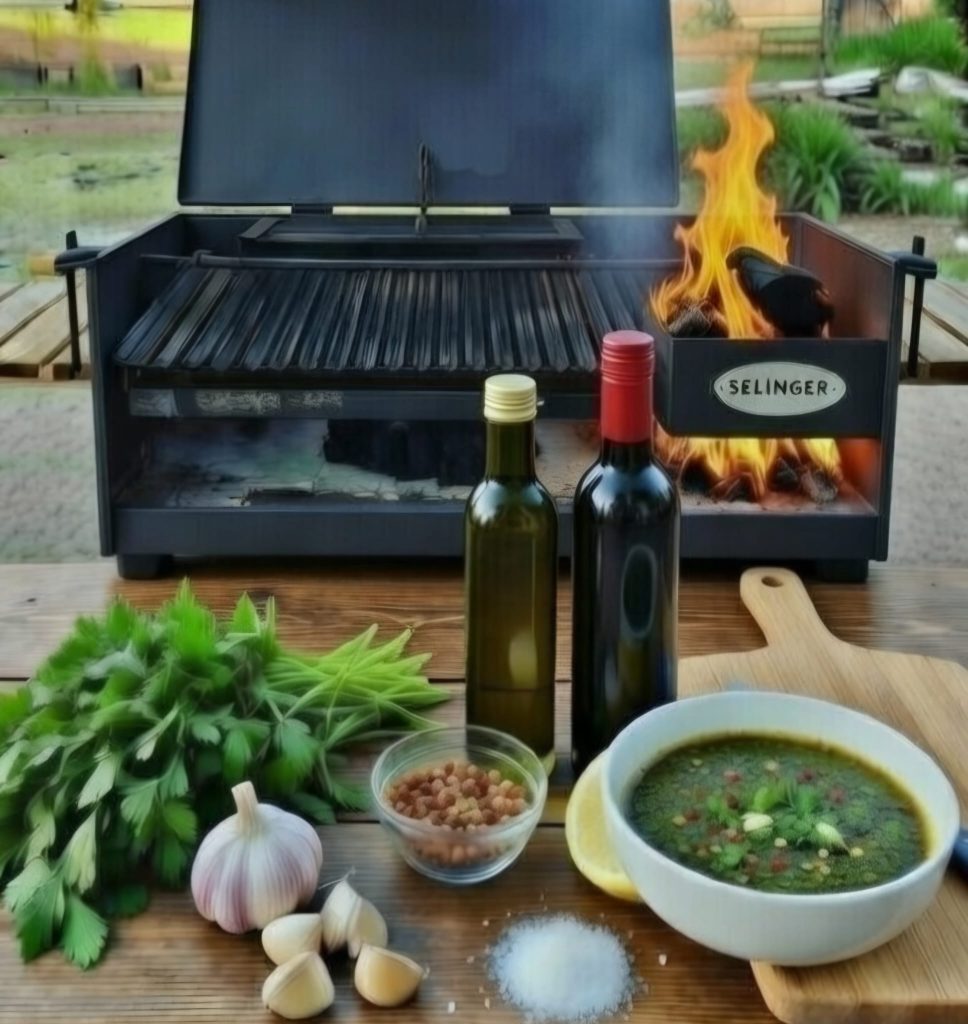
Chimichurri is one of the cornerstones of the Argentine parrilla and an essential partner for any cut of meat. Whether you cook in a professional kitchen or on a grill at home, having a fresh, balanced chimichurri ready in a few minutes makes all the difference. At Selinger Barbacoas, where precision and quality are part of how we work, this dressing is a real ally for bringing out the flavour of every piece.
Below you will find a quick, punchy version, well balanced, for anyone who wants efficiency without giving up authenticity.
Essential ingredients for a professional chimichurri
The key is to keep a balance between freshness, acidity and spice. For a 5-minute preparation, these ingredients are all you need:
3 tablespoons of finely chopped fresh parsley
2 garlic cloves, very finely chopped
1 teaspoon of dried oregano
1 teaspoon of ground ají (or chilli flakes)
½ teaspoon of black pepper
1 teaspoon of fine salt
3 tablespoons of wine vinegar
6 tablespoons of olive or sunflower oil
Optional: a splash of lemon juice for extra freshness
Quick preparation in 5 minutes
Step by step
Mix the parsley, garlic and spices in a bowl.
Add the vinegar and stir so that the oregano and ají rehydrate.
Add the oil a little at a time until the texture is even.
Adjust the salt and acidity to suit the meat or the way you plan to use it.
Leave to rest for 2–3 minutes so the flavours come together.
This method is designed for people at the grill who need results straight away without sacrificing quality.
Adjusting for the type of grill and cut
The chimichurri can be adapted to the way you cook or the cut you are working with:
Fatty cuts (asado, vacío, entraña): add slightly more vinegar to balance the richness.
Lean meats (chicken, pork, tenderloin): add a little extra oil to soften the dressing.
High-performance grills such as those made by Selinger Barbacoas: fresh chimichurri lifts the flavour without getting in the way of the natural aroma of the firewood or charcoal.
Technical tips for a more stable chimichurri
Getting the most out of it in a professional kitchen
Chopping the garlic and parsley very fine avoids harsh flavours and improves the texture.
Rehydrating the oregano in the vinegar before adding the oil releases more aroma.
Keep an eye on the acidity: in a restaurant, a chimichurri that is too sharp can overpower the dish.
Use a neutral oil if you want a more traditional profile that stays in the background.
Quick variations to extend the menu
In a professional kitchen, a few small variations let you set your offer apart without adding preparation time:
Chimichurri with lemon and citrus zest
Spicy chimichurri with extra ají or fresh chilli
Smoky chimichurri made with pimentón de la Vera (smoked paprika)
Mild green chimichurri with less garlic and more parsley
These alternatives work especially well on large-capacity grills or during continuous service.
Tips from an experienced grill cook
Make it just before service for a brighter colour and a fresher aroma.
Do not refrigerate it if you will use it within 2 hours: the cold dulls the aromas.
Use a mortar when you want a more rustic, traditional finish.
Combine it with marinades: a touch of chimichurri can act as the base for marinating thin cuts.
Configurator
Choose your grill in the configurator
Choose the grill and the size, and we will send you a quote with a drawing.
A well-made chimichurri is a valuable tool for anyone who cooks over fire, whether in a restaurant, at an event or on a grill at home. It is quick to prepare and brings out the flavour of the meat, which makes it an essential accompaniment. Building this recipe into your routine, especially on quality grills such as those from Selinger Barbacoas, lets you offer a more complete, professional and memorable dining experience.
We use analytics cookies to understand how the website is used. They are only activated if you accept.
Technical
Always active
Necessary for the website to work and to remember your choice.
Preferences
El almacenamiento o acceso técnico es necesario para la finalidad legítima de almacenar preferencias no solicitadas por el abonado o usuario.
Analytics
They tell us how the website is used, with Google Analytics 4.El almacenamiento o acceso técnico que se utiliza exclusivamente con fines estadísticos anónimos. Sin un requerimiento, el cumplimiento voluntario por parte de tu proveedor de servicios de Internet, o los registros adicionales de un tercero, la información almacenada o recuperada sólo para este propósito no se puede utilizar para identificarte.
Marketing
El almacenamiento o acceso técnico es necesario para crear perfiles de usuario para enviar publicidad, o para rastrear al usuario en una web o en varias web con fines de marketing similares.