How to season, clean and look after your steel or stainless steel barbecue
By Selinger Barbacoas5 min read
Keeping a barbecue in perfect condition is not only a question of hygiene; it is an investment in the durability of the equipment and, above all, in the quality of the asado. At Selinger Barbacoas, as makers who specialise in Argentine grill systems, we know that metal needs specific treatment depending on its nature and shape.
Whether you work in hospitality or simply love cooking over fire at home, this technical guide will help you season, clean and carry out preventive maintenance on your steel and stainless steel equipment without compromising the integrity of the material.
1. The first step: how to season a steel grill
Before the first asado on a steel barbecue, it is essential to season it. This step creates a protective layer of polymerised fat that prevents rust and helps stop food sticking.
Initial cleaning: remove any manufacturing residue with a damp cloth and dry it immediately.
Oiling: apply a generous layer of animal fat or vegetable oil over the whole surface of the rods.
Heat treatment: light a hot fire and let the grill come up to temperature for 40–60 minutes. The metal will absorb the oil and change to a darker, glossier shade.
Final seal: once it is cold, wipe off any excess fat with kitchen paper.
2. Cleaning to suit the design: round rods vs. V-grates
At Selinger Barbacoas we make both systems, and each one needs a different cleaning technique so that the lifting system and the cooking surfaces keep working smoothly.
Round steel rods
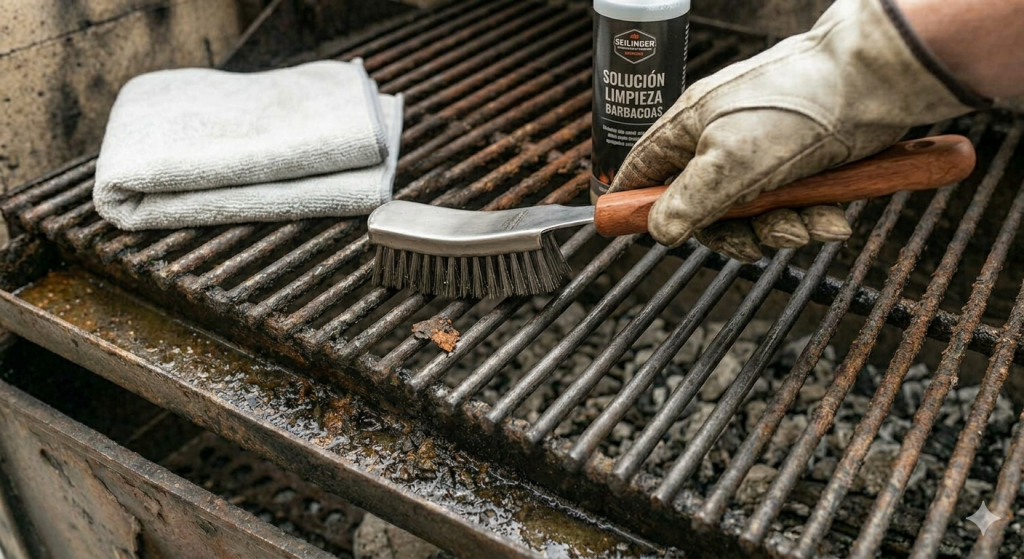
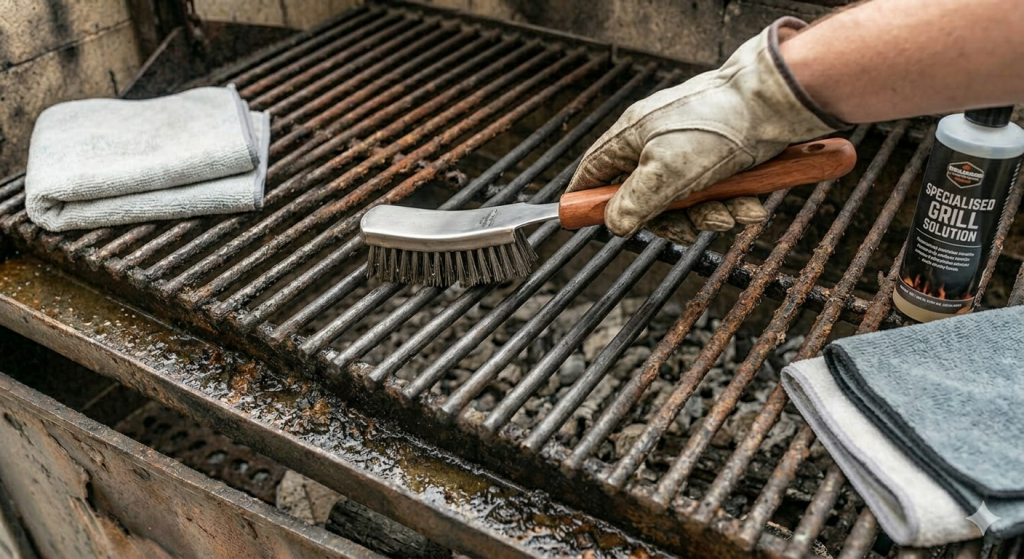
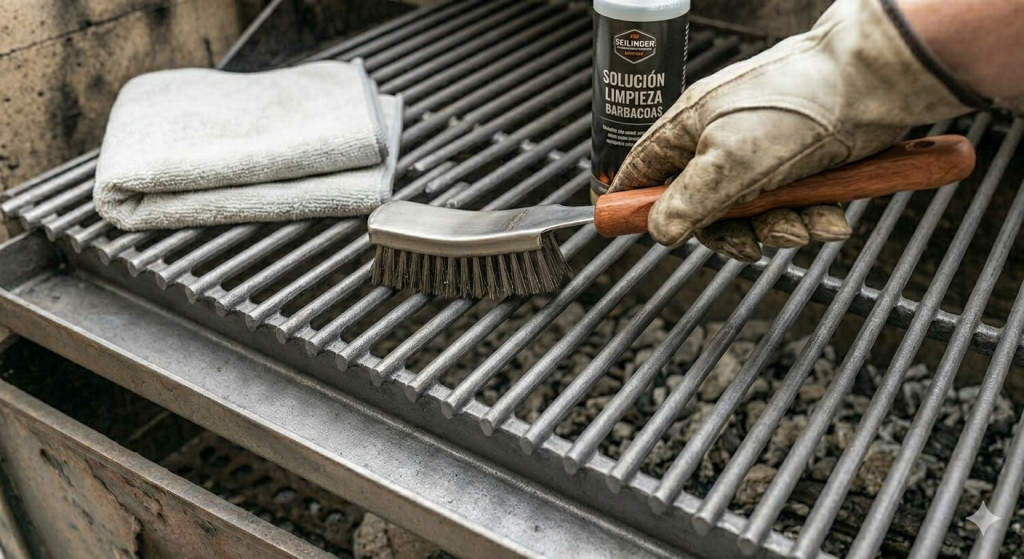
These are the easiest to maintain. The secret is to take advantage of the residual heat after the asado. Use a high-density wire brush to loosen the organic residue. Because the rods are round, remember to turn the brush so that you clean the sides of the rod, where charred fat tends to build up.
V-grates with a drip tray
This design is excellent for stopping fat from falling straight onto the embers (avoiding flare-ups), but it needs more attention. Use a scraper made for the angle of the ‘V’ to draw the fat towards the collecting channel. Never forget to empty and clean the drip tray; it is the spot where bacteria can multiply most if it is left forgotten.
3. Steel vs. stainless steel: specific care
The material determines how aggressive our cleaning can be. Not all metals react in the same way to moisture or chemicals.
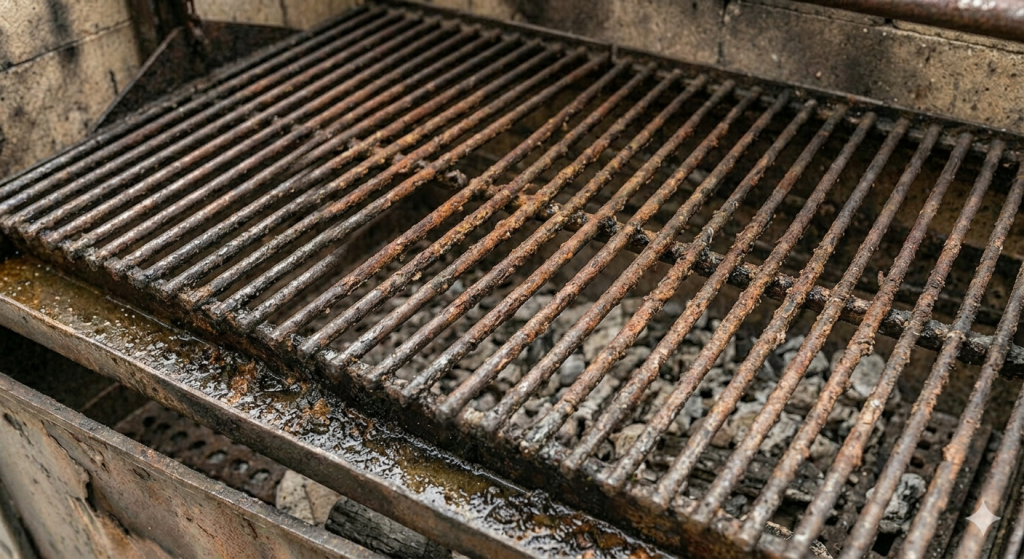
Steel grills: they are sensitive to moisture. After mechanical cleaning they should always be left oiled. If surface rust appears, do not worry: sand the area lightly, clean it and season it again.
Stainless steel grills: they are simple to keep hygienic, and the care is mostly about appearance. Avoid carbon steel scouring pads, which can leave ferrous particles behind and cause ‘rust contamination’. Use products made for stainless steel, or warm soapy water, and rinse well to avoid limescale marks.
4. The role of fire in a safe asado
Cooking on an Argentine grill is an art that starts with heat management. A common mistake is to try to clean the grill with excessive fire, on the theory that ‘fire burns everything off’.
Although heat helps to char off residue, unnecessary extra temperature can soften the steel or speed up corrosion of the metal if it is not treated afterwards. Fire should be your ally for the initial thermal disinfection before you put the meat on, but a deep clean should be done by hand, mechanically.
5. Maintaining the lifting system and a custom structure
A barbecue of your own design, like the ones we design at Selinger, has moving parts. To keep the Argentine lifting system (crank handle and chains) from seizing up:
Lubrication: apply mineral oil to the pivot points and chains once a month.
Firebricks: clear the ash from the sides and the base after every use. Built-up ash holds moisture, which can rust the metal structure below.
Visual check: check that the bricks have no deep cracks that could let heat through to the metal frame.
Pro tips for an immaculate barbecue
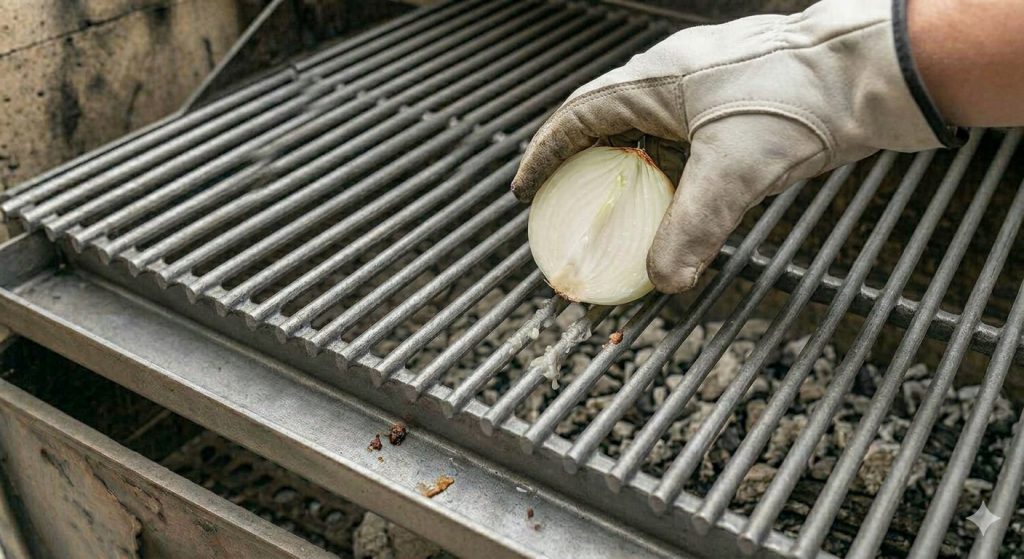
The onion, the classic trick: if the grill is hot and you do not have a brush to hand, half an onion helps to disinfect it and loosen residue thanks to its natural acidity.
Dry completely: moisture is enemy number one. Never put a cover on your barbecue if it is still damp from cleaning; this creates a greenhouse effect that speeds up rusting.
Using degreasers: if you use chemicals, make sure they are food-grade and always rinse thoroughly.
Configurator
Choose your grill in the configurator
Choose the grill and the size, and we will send you a quote with a drawing.
Cleaning and seasoning a grill is not just a maintenance chore; it is the ritual that makes sure every cut of meat keeps its original flavour, free from old charcoal residue or rancid fat. A Selinger barbecue is designed to last for decades, as long as the metal gets the care it deserves.
Spending ten minutes after every asado protecting the steel or polishing the stainless steel will make the difference between a functional barbecue and a masterpiece of outdoor cooking.
We use analytics cookies to understand how the website is used. They are only activated if you accept.
Technical
Always active
Necessary for the website to work and to remember your choice.
Preferences
El almacenamiento o acceso técnico es necesario para la finalidad legítima de almacenar preferencias no solicitadas por el abonado o usuario.
Analytics
They tell us how the website is used, with Google Analytics 4.El almacenamiento o acceso técnico que se utiliza exclusivamente con fines estadísticos anónimos. Sin un requerimiento, el cumplimiento voluntario por parte de tu proveedor de servicios de Internet, o los registros adicionales de un tercero, la información almacenada o recuperada sólo para este propósito no se puede utilizar para identificarte.
Marketing
El almacenamiento o acceso técnico es necesario para crear perfiles de usuario para enviar publicidad, o para rastrear al usuario en una web o en varias web con fines de marketing similares.