Types of grill grates: which one to choose for your asado
By Selinger Barbacoas3 min read
In brief
Choose the V-grate if you want the fat to run down the channels and not feed the fire. Choose the round steel rod grate if you prefer a flat surface that is easy to clean, with no flavours crossing over. Both cook well: they differ in cleaning, embers and how flavours are shared out.
Types of grill grate: V-grate and round-rod grate
There are many types of grill grate, but two are the ones you will come across most: the V-grate and the round steel rod grate. Both do the same job. What changes is how they deal with fat, embers and cleaning.
Choose the one that feels most comfortable to cook on and suits your needs.
V-grate: what it offers and what it asks of you
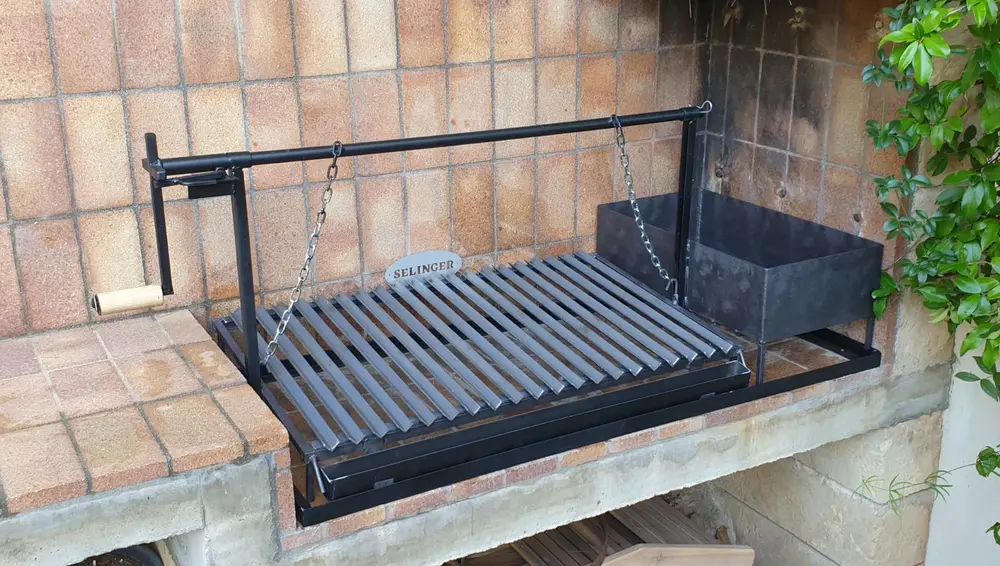
It slopes. The fat runs down the V-shaped channels and does not drop onto the embers, so the fire does not flare up. We make V-grates with a drip tray.
Selinger V-grate with drip tray, chain lifting system and brazier.
What it offers
It stops the fat feeding the fire and the fire getting hotter than you want.
What to bear in mind
It is harder to clean than the round-rod grate. Because it slopes, the cuts underneath can pick up the flavour of those above. If you put chinchulines (grilled beef small intestines) on top and chorizo underneath, the chorizo can come out with a hint of chinchulín.
Round-rod grate: what it offers and what it asks of you
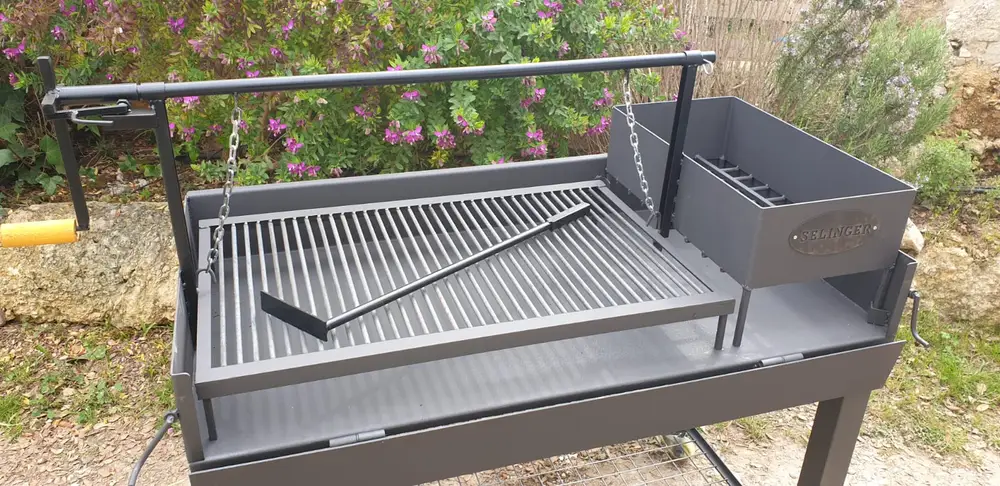
It is completely flat, made with round steel rod.
Selinger round-rod grate, with chain lifting system and brazier.
What it offers
It does not mix flavours between cuts and it is easy to clean.
What to bear in mind
Fat sticks to the metal more easily. It also produces more embers, and the meat is more likely to burn.
V-grate or round-rod grate: comparison
Criterion
V-grate
Round-rod grate
Fat
Runs down the V channels
Sticks to the metal more easily
Fire and embers
The fire does not flare up
More embers and more risk of burning the meat
Cleaning
Harder
Easier
Flavours between cuts
Those underneath can pick up the flavour of those above
They do not mix: it is flat
Configurator
Choose your grill in the configurator
Choose the grill and the size, and we will send you a quote with a drawing.
If you do not want the fat to feed the fire, choose the V-grate. If your priority is easy cleaning and keeping flavours apart, choose the round-rod grate.
If you are unsure, talk to an experienced maker. We build every grill made to measure: write to us and we will tell you which one suits the way you cook.
Frequently asked questions
Questions about the grill grate
Which grate stops the fat feeding the fire?
The V-grate. It slopes and the fat runs down the V-shaped channels instead of dropping onto the embers, so the fire does not shoot up. In return, it is harder to clean than the round-rod grate and the cuts underneath can pick up flavour from those above.
Which grate is easier to clean?
The round steel rod grate. It is completely flat, so flavours do not mix between cuts and it is easy to clean. The trade-off is that fat sticks to the metal more easily and more embers are produced, with a higher risk of the meat burning.
Do flavours mix on the V-grate?
They can. Because the grate slopes, the cuts underneath can pick up the flavour of those above. If you put chinchulines on top and chorizo underneath, the chorizo can come out with a hint of chinchulín. Avoid combining cuts with very different flavours on the same grate.
We use analytics cookies to understand how the website is used. They are only activated if you accept.
Technical
Always active
Necessary for the website to work and to remember your choice.
Preferences
El almacenamiento o acceso técnico es necesario para la finalidad legítima de almacenar preferencias no solicitadas por el abonado o usuario.
Analytics
They tell us how the website is used, with Google Analytics 4.El almacenamiento o acceso técnico que se utiliza exclusivamente con fines estadísticos anónimos. Sin un requerimiento, el cumplimiento voluntario por parte de tu proveedor de servicios de Internet, o los registros adicionales de un tercero, la información almacenada o recuperada sólo para este propósito no se puede utilizar para identificarte.
Marketing
El almacenamiento o acceso técnico es necesario para crear perfiles de usuario para enviar publicidad, o para rastrear al usuario en una web o en varias web con fines de marketing similares.