The asado ritual is much more than simply cooking meat; it is an act of patience, a gathering of loved ones and, above all, a tribute to fire. When you are lucky enough to have an Argentine Selinger grill, designed to master the heat and respect the pace of the meat, cooking becomes an art that anyone can enjoy.
At Selinger Barbacoas we understand that the design of our grills, with their height adjustment systems and materials of high thermal mass, has a single purpose: for the result on the plate to be outstanding. That is why we have picked five emblematic cuts that make the most of your equipment and will lift your outdoor gatherings.
The ritual of cooking on an Argentine grill
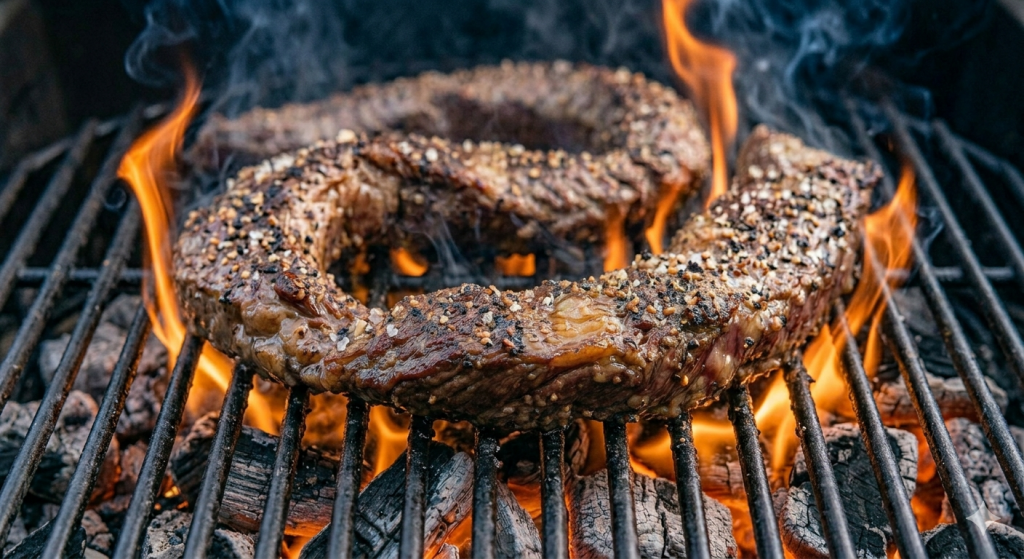
An asado cannot be hurried. The secret of Argentine beef lies not only in the breed of the animal but in respect for the cut and in slow cooking over wood or charcoal embers. A Selinger custom barbecue lets you manage that energy precisely, so that cuts others might think ‘difficult’ become gems of the table.
Below, we look at the cuts that will define you as an asador.
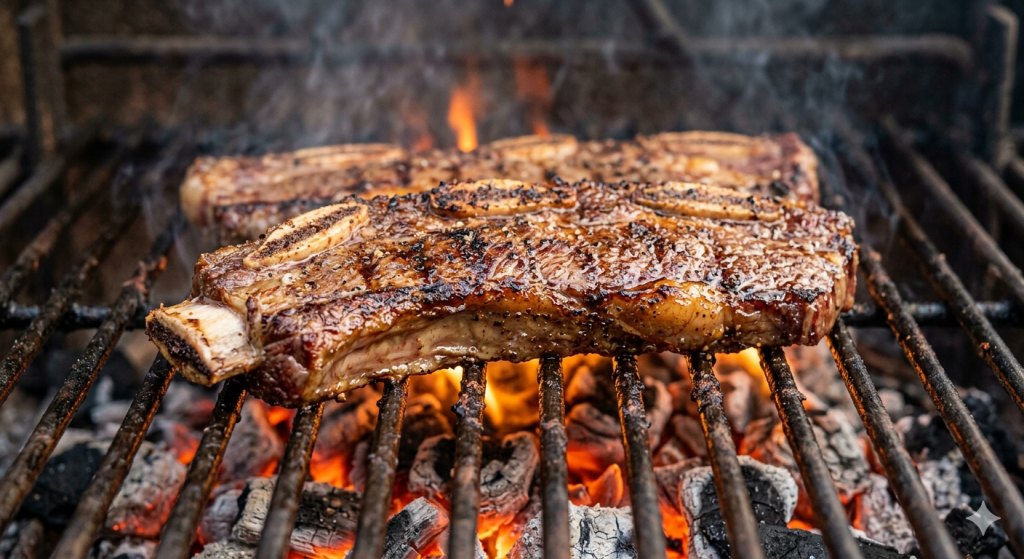
1. Tira de asado (short ribs)
This is the cut par excellence. It comes from the beef rib section, cut across the bones into ‘strips’. It is the soul of any family gathering.
Why on a Selinger: this cut needs moderate-to-slow heat so that the connective tissue breaks down and the meat comes away from the bone easily.
Expert tip: always start cooking on the bone side. The bone acts as a heat conductor, cooking the meat evenly from the inside out.
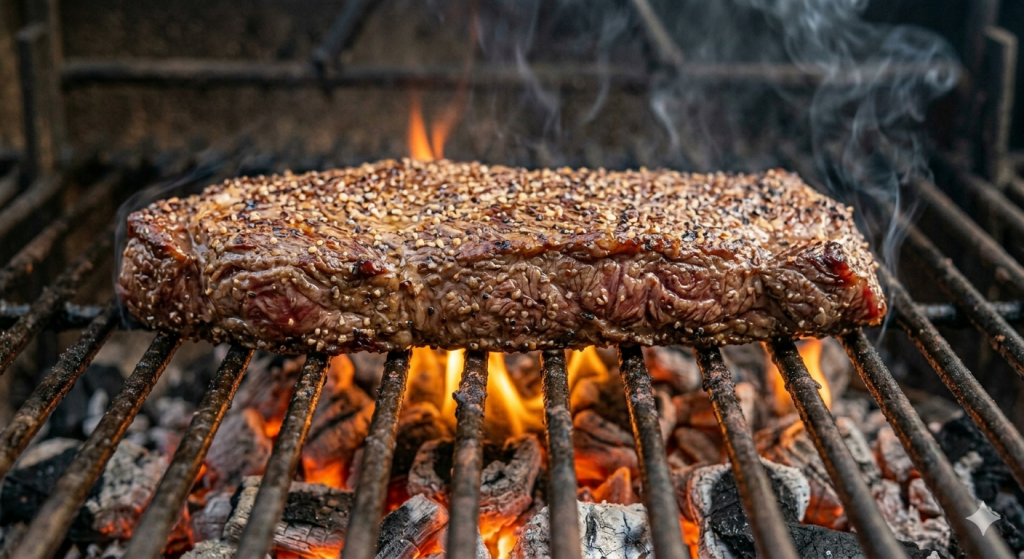
2. Vacío (flank)
The vacío is a cut from the rear side of the animal. It is covered by a thin membrane, the ‘cuerito’, which, if treated well, gives a wonderfully crisp texture.
Sensory experience: the meat is extremely juicy and has an intense flavour.
Technique: because it is a piece with long fibres, precision in the height of the grill is key. Cooking it slowly keeps the inside pink and tender while the outside caramelises.
3. Lomo alto (rib steak) and the ribeye
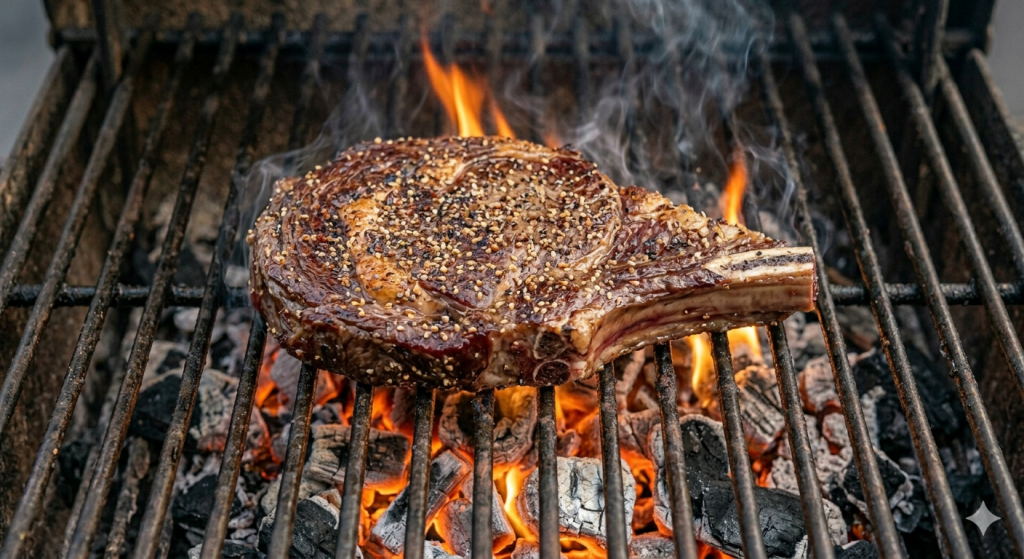
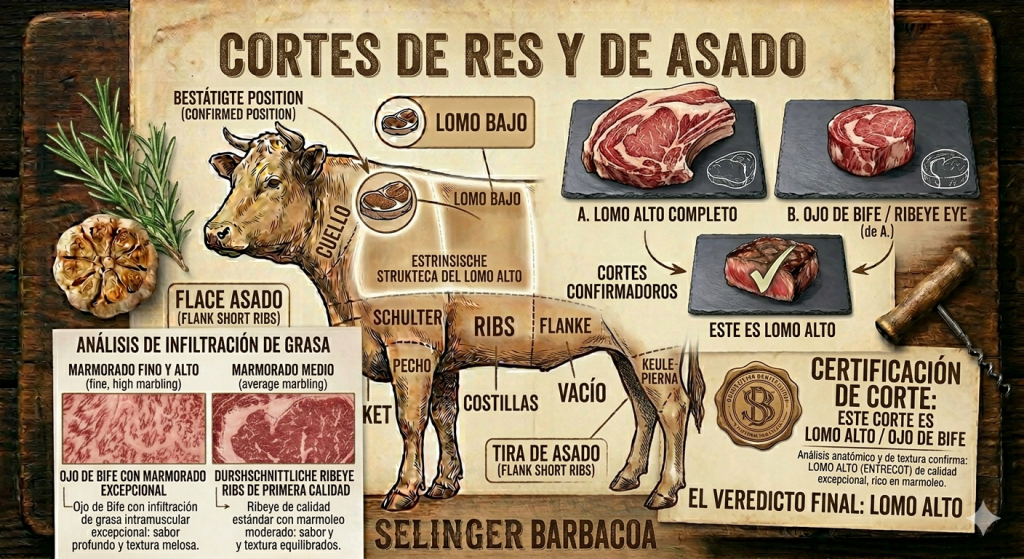
For those who want technical excellence and a sophisticated flavour, this cut is the king. The lomo alto is the whole piece from which entrecôte steaks are cut, and at the heart of it lies the ribeye, which stands out for its remarkable intramuscular fat, or ‘marbling’.
The Selinger advantage: thanks to the even distribution of heat in our grills, you can sear the cut quickly to keep the juices in and then give it a short rest at a higher level.
Presentation: we recommend serving it in thick cuts (at least 3 or 4 cm) to enjoy its buttery texture.
A cut that has gone from being a secret among asadores to a cult piece in high-end restaurants. It is a thin, elongated muscle with a powerful flavour.
Cooking on an Argentine grill: unlike the previous cuts, entraña likes a strong, fast fire.
The trick: do not remove the skin that covers it; as it browns on your barbecue it gives a crisp contrast that protects the juiciness inside the cut.
5. Matambre (flank roll)
Although it is a thinner cut, matambre is a rewarding challenge for any grill owner. It can be prepared ‘al libro’ (with the filling inside) or simply on the grill with salt and lemon.
Versatility: it is ideal for starters while the thicker cuts finish cooking.
Suggestion: try ‘matambre a la pizza’, adding tomato sauce and cheese on top of the cut once you have turned it on the grill.
Tip from the master asador: understand your cut with the Selinger Barbacoas chart
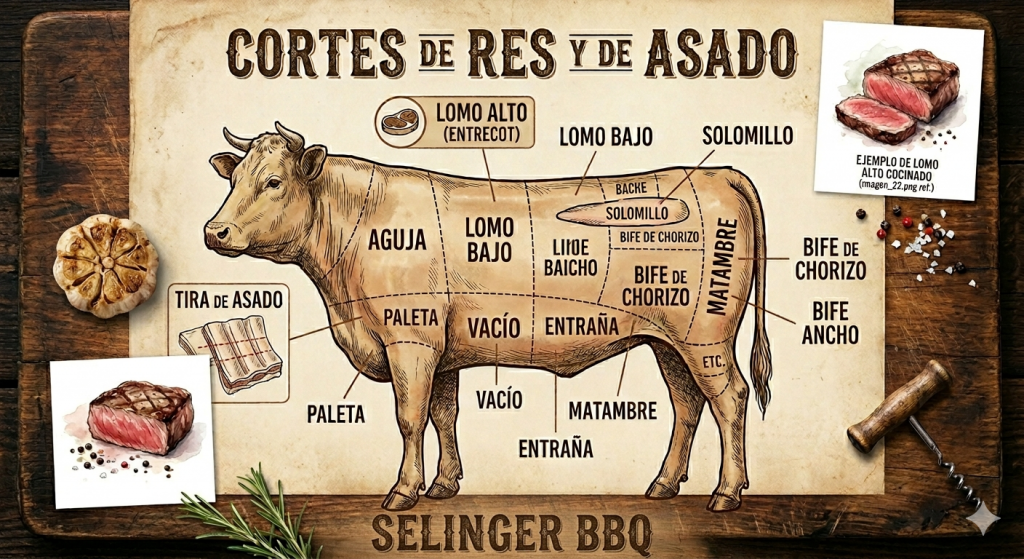
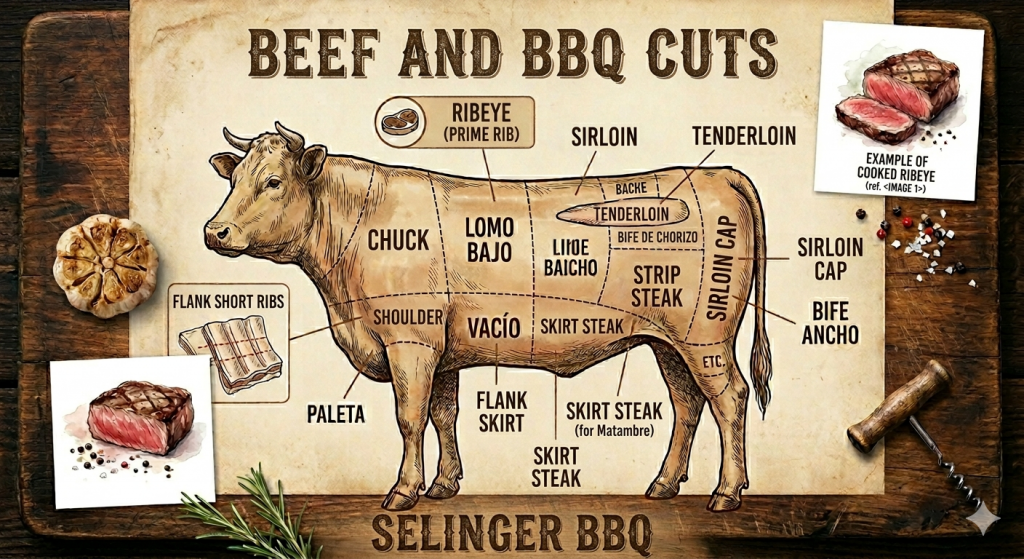
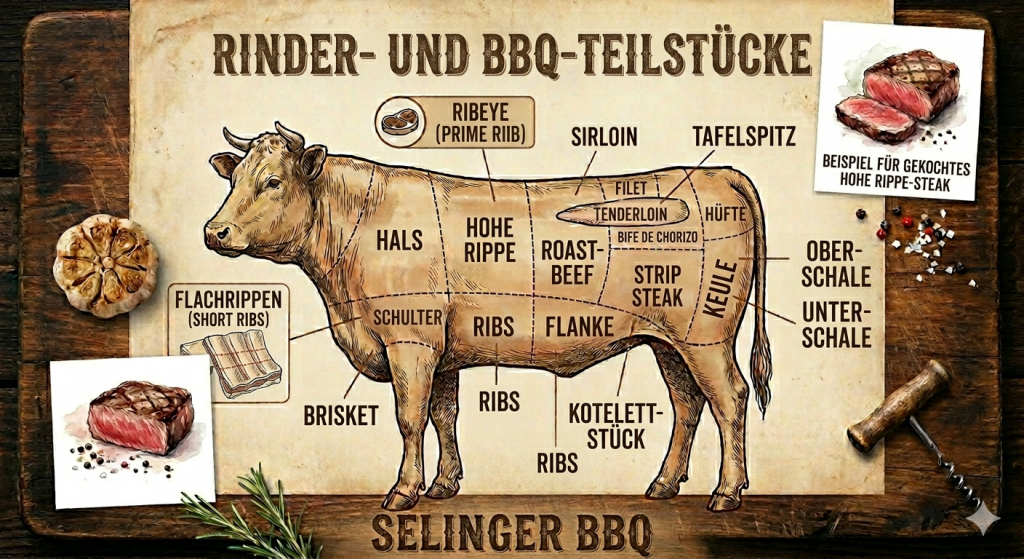
Success at the grill begins with knowing the product. This Selinger Barbacoas chart is your guide to where each piece comes from and how to tell apart the key cuts we mention in this blog:
Lomo alto (entrecôte / Hohe Rippe): note its position along the top. This area does not carry the animal’s weight, which makes it extremely tender and ideal for the intense marbling we are after.
Lomo bajo (roast beef): located just after the lomo alto, it is the piece from which the traditional ‘bifes de chorizo’ (sirloin steaks) are cut, leaner but very tasty.
Solomillo (fillet / tenderloin): the most delicate and lean cut, found in a small piece inside the animal. The chart shows clearly how prime this cut is.
The importance of the right accessories
A good cut of meat deserves professional treatment. At Selinger Barbacoas we do not just make the structure; we design the utensils and accessories that complete the ritual. From shovels and pokers to manage the embers without effort, to wooden boards that respect the edge of your knives, every item is made so that all you have to think about is enjoying the open air.
Configurator
Choose your grill in the configurator
Choose the grill and the size, and we will send you a quote with a drawing.
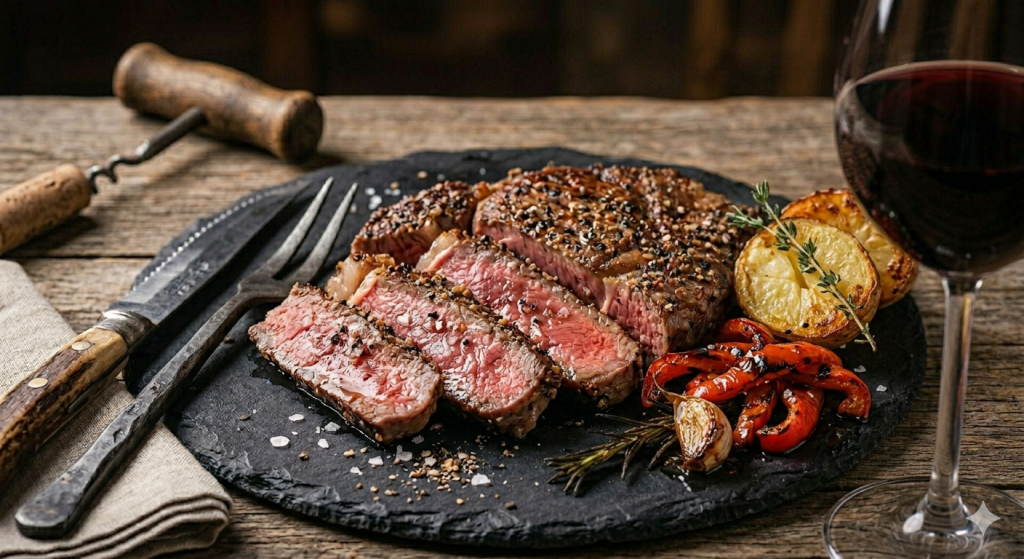
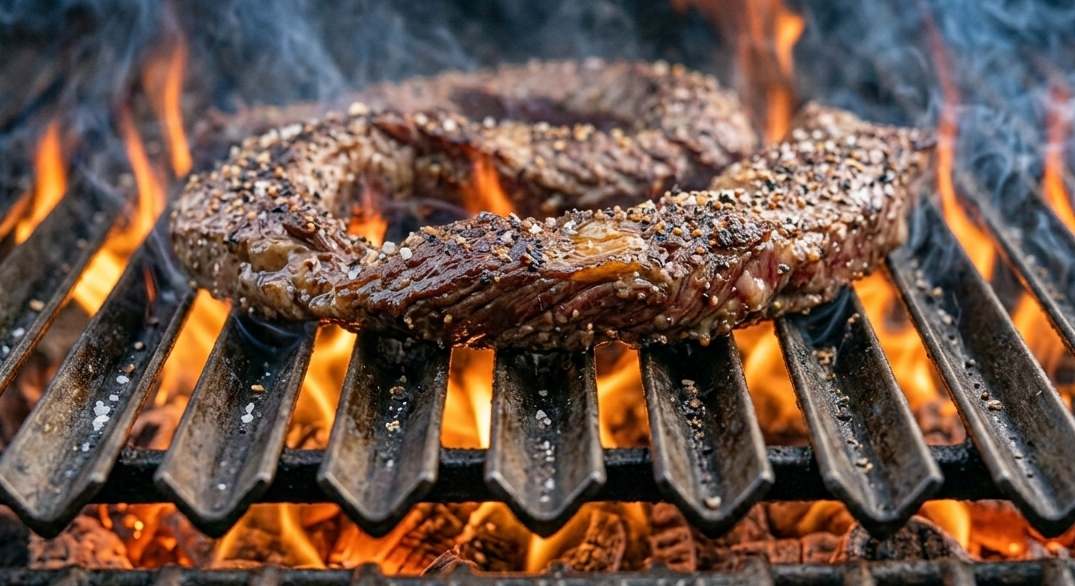
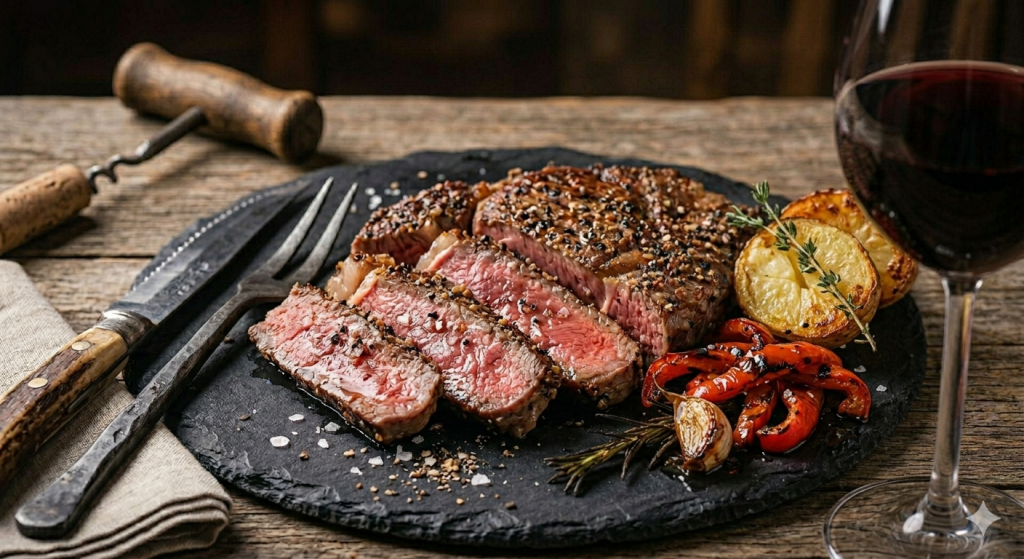
Once you have mastered the technique with your Selinger grill, the result will be a piece like the one in this picture. Look at the details:
A perfect sear on the outside, which builds a crust of flavour with the salt and pepper.
A juicy, pink inside, where the fat has melted to bring out the flavour.
This is the aim of Selinger Barbacoas: not just to sell you a tool of exceptional manufacture, but to guide you to the moment when you serve a perfect plate, with a good wine, shared with the people you love. This is the true ritual of the unhurried asado.
Conclusion: quality, time and Selinger
Choosing a quality Argentine cut of beef is the first step, but success depends on the tool. A Selinger custom barbecue makes sure that control of the fire is always on your side, letting you give your guests a dining experience that goes beyond a simple meal.
The asado is a pause, a conversation and excellence. We invite you to light the embers, try these cuts and find out why, with the right equipment, every Sunday can be an unforgettable event.
We use analytics cookies to understand how the website is used. They are only activated if you accept.
Technical
Always active
Necessary for the website to work and to remember your choice.
Preferences
El almacenamiento o acceso técnico es necesario para la finalidad legítima de almacenar preferencias no solicitadas por el abonado o usuario.
Analytics
They tell us how the website is used, with Google Analytics 4.El almacenamiento o acceso técnico que se utiliza exclusivamente con fines estadísticos anónimos. Sin un requerimiento, el cumplimiento voluntario por parte de tu proveedor de servicios de Internet, o los registros adicionales de un tercero, la información almacenada o recuperada sólo para este propósito no se puede utilizar para identificarte.
Marketing
El almacenamiento o acceso técnico es necesario para crear perfiles de usuario para enviar publicidad, o para rastrear al usuario en una web o en varias web con fines de marketing similares.